Cheese sauce: basic recipe, the right cheese and tips for a smooth sauce

Cheese sauce is one of the most versatile sauces in the kitchen. The same basic recipe gives you a sauce for macaroni cheese, lasagne, cauliflower cheese, baked potatoes or simply a bowl of pasta. Master a few basics and your sauce will turn out smooth and glossy every time.
In this guide we cover the basic recipe, the right ratios, which cheeses work best, why cheese sauce sometimes turns lumpy or splits and how to rescue it.
Basic cheese sauce recipe
Cheese sauce starts with a white sauce, also known as béchamel. The basic ratio is easy to remember: about 25 to 30 grams of butter, 25 grams of plain flour and 500 millilitres of milk. That makes roughly half a litre of sauce, enough for four people.
Melt the butter in a pan over low heat, add the flour and cook, stirring, for a minute or two. Add the cold milk gradually, whisking all the time. Once the sauce thickens, let it simmer gently for about five minutes, stirring now and then, so the raw flour taste cooks out. Then take the pan off the heat and stir in the grated cheese a handful at a time.
Use around 100 to 150 grams of cheese per 500 millilitres of milk. The smaller amount is enough for a gratin topping, the larger one gives a properly cheesy sauce for macaroni cheese. Finish with pepper, a pinch of nutmeg and salt if needed. A teaspoon of Dijon mustard deepens the cheese flavour.
Which cheese is best for cheese sauce?
The best cheese sauce comes from combining two types of cheese. A mild, moister cheese such as Edam, Gouda or Emmental melts evenly and makes the sauce smooth and stretchy. A strong aged cheese such as mature Cheddar or Parmesan adds depth, but on its own it splits more easily because it contains less moisture.
Blue cheese works especially well in a sauce for steak or chicken. You need less of it than Cheddar, and because it is naturally salty, always taste the sauce before adding salt. Processed cheese makes a sauce particularly smooth, and a small amount can be added alongside regular cheese.
How much sauce do you need?
For pasta, 100 to 150 millilitres of sauce per person is usually enough. For bakes, where the pasta soaks up the sauce, make a little extra. If you are wondering how much dry pasta to cook, see our guide on how much pasta per person. And if a recipe uses cups or spoons and you need grams, our guide to kitchen measurements will help.
7 tips for a perfect cheese sauce
Grate the cheese before you start so you can focus on stirring.
Cook the flour in the butter for a minute or two without letting it brown.
Add the milk gradually and whisk constantly to prevent lumps.
Let the base simmer for about five minutes so the raw flour taste cooks out.
Take the pan off the heat and stir in the cheese a handful at a time.
Combine a strong aged cheese with a mild cheese that melts easily.
Taste at the end and salt sparingly, as the cheese already adds salt.
Why does cheese sauce go lumpy or split?
Lumps usually form when the milk is added to the flour mixture too quickly. If lumps remain, whisk the sauce hard or pass it through a sieve. A stick blender smooths it out in seconds.
Splitting is a trickier problem. Cheese is made of fat, water and proteins. When cheese gets too hot, the fat separates and the proteins clump together, leaving the sauce grainy and greasy. That is why the cheese goes in only once the pan is off the heat, and the sauce is not boiled after the cheese is added.
If your sauce does split, take it off the heat immediately, add a splash of cold milk and whisk vigorously. The texture often comes back. If not, a stick blender helps. Next time, use more of an easy melting cheese and less of an aged one.
Gluten free and lactose free cheese sauce
For a gluten free cheese sauce, skip the butter and flour and thicken the milk with cornflour. Mix two tablespoons of cornflour with a little cold milk, stir it into the hot milk and heat, stirring, until the sauce thickens. For a lactose free version, use lactose free milk; most hard aged cheeses are naturally almost lactose free.
What to use cheese sauce for
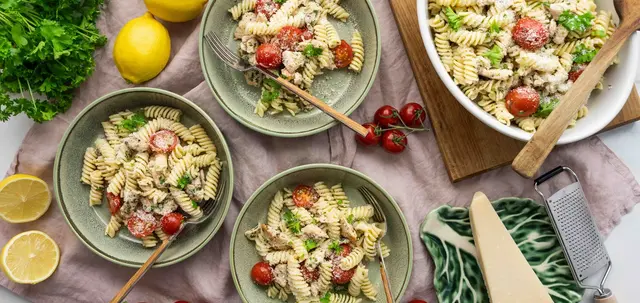
Cheese sauce is the classic base for macaroni cheese, lasagne and gratins. Try for example mac 'n cheese with bacon and salad, where the cheese sauce turns a simple dinner into a treat. It also works with vegetables, as in pork slices with baked cauliflower, cheese and potatoes, where the cheese gives the cauliflower a golden crust.
Cheese sauce is also great for baking broccoli and for serving with fish and chicken. For more ideas, browse our sauce recipes.
Storing and reheating cheese sauce
Cool leftover sauce quickly and keep it in a lidded container in the fridge. Use it within a few days. For storage times for different foods, see our guide on how long food keeps in the fridge.
The sauce thickens as it cools. Reheat it gently in a pan, add a splash of milk and whisk until smooth again. Avoid boiling it so the cheese does not split. Freezing cheese sauce is not recommended, as the texture often turns grainy after thawing.
Sauce sorted, what about the whole dinner?
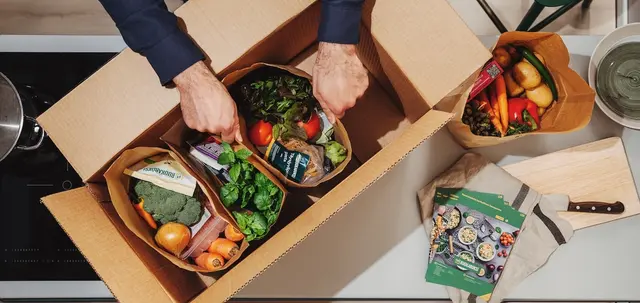
Our boxes bring pre-measured ingredients and step by step recipes for creamy pastas, bakes and other weeknight dinners straight to your door. No meal planning or shopping trips.