Cooking with kids: age appropriate tasks and tips for picky eaters


A child who has rinsed the carrots and stirred the sauce meets the finished meal differently from a child who simply finds a plate in front of them. Cooking together is not only pleasant time together, it is one of the most practical ways to introduce a child to new ingredients.
Nutrition education guidance recommends involving children in cooking, baking and shopping precisely because new foods become familiar through doing. In the kitchen a child sees, smells and touches the food before having to taste it, and that lowers the threshold.
Why picky eating is normal
Avoiding new food is a developmental stage, not a parenting mistake. It is most common between roughly two and six years of age, and research literature suggests that a new flavour often needs ten to fifteen tasting occasions before a child accepts it. Many families give up after a few attempts.
In practice this means offering the same vegetable repeatedly without pressure, and ideally in different forms: raw as sticks, roasted in the oven and blended into a sauce. A small taste on the plate is enough, and it does not have to be finished.
Start with one step
Cooking a whole meal together does not work on a weekday evening, and it does not need to. Pick one step that fits the child: assembling the salad, grating the cheese or measuring the spices. When the step is clear and limited, the evening does not stretch, and the child still owns part of the meal.
A familiar, easily varied dish makes a good training ground, for example Bolognese Pasta with Aromatic Herbs and Italian Cheese. The child can handle the grating and the table setting while the adult deals with the minced meat and the hot pan.
Age appropriate tasks in the kitchen
Ages 1 to 2: wash vegetables, move ingredients from bowl to bowl, tear salad leaves and carry their own dishes to the table next to an adult.
Ages 3 to 4: stir batter, measure dry ingredients, peel a banana or a boiled egg and cut soft foods with a child safe knife.
Ages 5 to 6: grate cheese, peel carrots with a peeler, crack eggs and set the whole table on their own.
Ages 7 to 9: read the recipe out loud, cut vegetables with a sharp knife under supervision and use the hob while an adult is in the kitchen.
Age 10 and up: make a simple meal from start to finish, use the oven with agreed rules and take charge of one dinner a week.
At every age: wash hands before starting, leave raw meat and chicken to the adult, and give the child a sturdy step stool to reach the worktop.
Safety in the kitchen
Hands are washed before starting and always after handling raw meat, chicken or eggs. Raw poultry and minced meat are best left to the adult, with their own chopping board. Food safety guidance is to cook poultry through to an internal temperature of at least 75 degrees and minced meat all the way through.
Sharp knives, the hot hob and the oven stay with the adult until the child can use them under supervision. Pan handles are turned inwards, the step stool is sturdy and does not swivel, and the child is told in advance what may and may not be touched.
Give the child real responsibility
Agree on one day a week when the child or teenager chooses the meal and joins the planning. Having a say builds responsibility, and a self chosen dish almost always tastes better. Limit the options to two or three so the decision comes quickly.
Expect a mess. Plan cooking together for a weekend or a calmer evening, not for the busiest weekday. In a rush, cooking turns into giving orders, and that is exactly what takes the joy out of it.
Cooking together needs no special skill and no new equipment. It needs a little time and a willingness to accept a result that is uneven but the child's own.
Easier weeks, more time to cook together
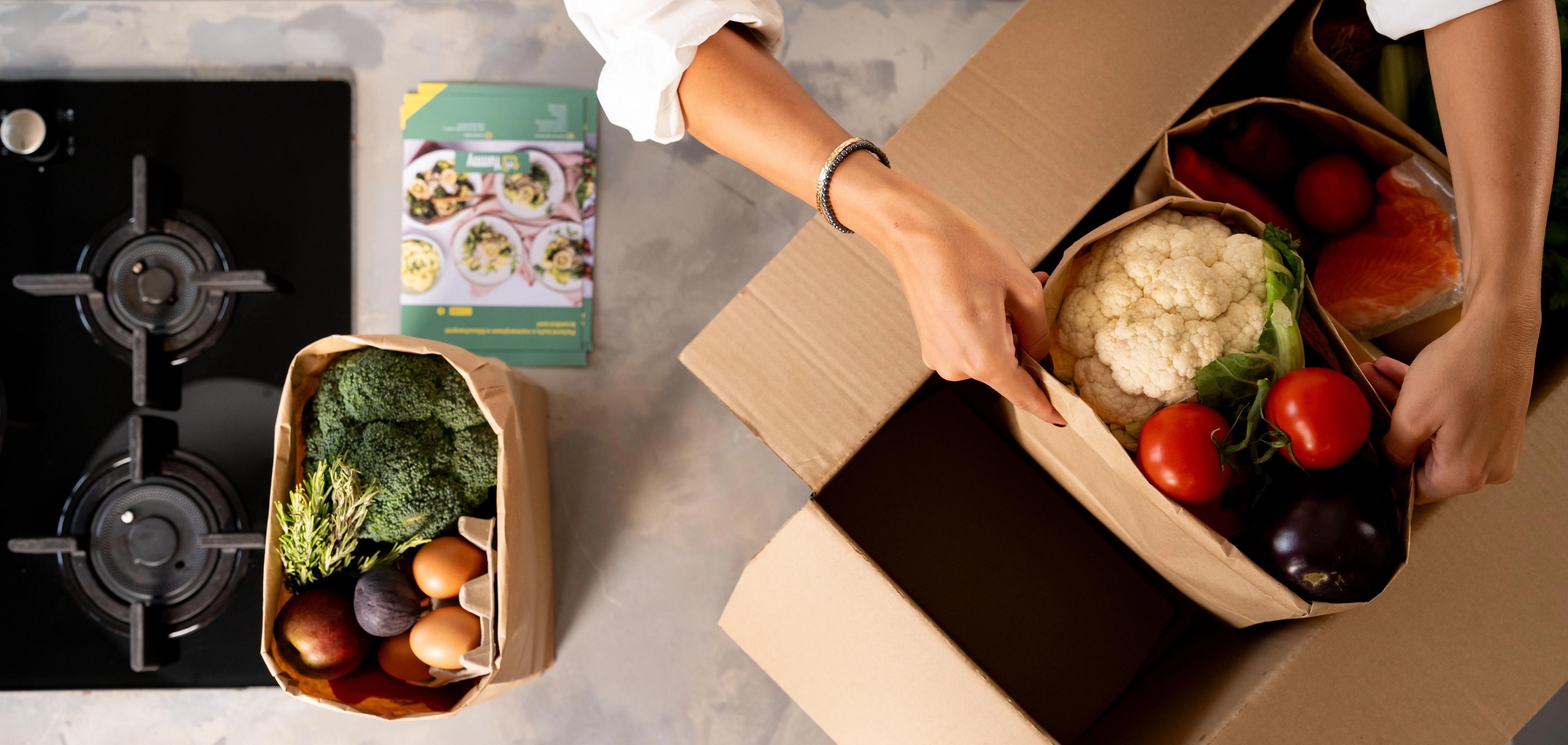
A Yummy box brings pre measured ingredients and clear recipes, so your child can take one step of the cooking without making the evening longer.