Air fryer guide: times, temperatures and common mistakes

An air fryer is usually the fastest appliance in the kitchen to heat up, so it gets used on the busiest weeknights. Many people still use it mainly for reheating frozen products, because times and temperatures feel like guesswork.
Despite the name, an air fryer does not fry. It is a small, powerful convection oven where a fan circulates hot air around the food, so the surface browns quickly and food cooks noticeably faster than in a regular oven.
How to choose the temperature and time
Most everyday food works between 180 and 200 degrees. A lower temperature suits thick pieces that need time to cook through, a higher one suits thin vegetables and potatoes where you want a crisp surface. Let the appliance heat for two to three minutes before adding food.
If you are following an oven recipe, drop the temperature by about 20 degrees and check the food well before the stated time. An air fryer cooks faster than an oven, so watch the last few minutes rather than the clock.
Guideline times for common ingredients
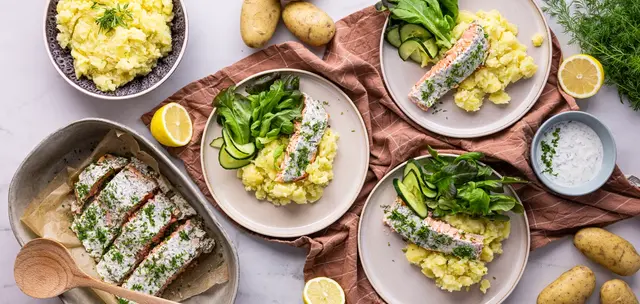
Chicken breast usually takes about 12 to 18 minutes at 180 to 200 degrees depending on thickness, turned once. A salmon fillet takes about 6 minutes at 180 degrees when thin and up to 12 minutes when thick. Potato wedges crisp up at 200 degrees in about 20 to 25 minutes when you shake the basket in between, and vegetables such as broccoli and carrot are ready in about 10 to 15 minutes.
These are guidelines. Appliance power varies a lot, and the same recipe can differ by several minutes depending on basket size and how full it is.
Confirm doneness with a thermometer
Food safety guidance is to cook meat to over 70 degrees in the centre and poultry to over 75 degrees. Minced meat and patties made from it are always cooked through. A probe thermometer is especially useful with an air fryer, because the surface looks done long before the inside is.
Checklist for air fryer cooking that works
Preheat the appliance for two to three minutes before adding food to the basket.
Arrange food in a single layer, because an overfilled basket steams instead of crisping.
Shake the basket or turn the pieces once halfway through cooking.
Brush dry ingredients lightly with oil so the surface browns evenly.
From an oven recipe, drop about 20 degrees and check the food several minutes earlier.
Check meat and poultry with a thermometer, not by colour.
The most common mistakes
The most common mistake is an overfilled basket. When pieces overlap, moist air cannot escape and the food steams soft. The second is too high a temperature for thick pieces, so the surface darkens before the centre is done. The third is forgetting to turn the food, which shows as one-sided browning.
What not to put in an air fryer
A wet batter drips through the basket, and so does a lot of melting cheese. Raw rice or pasta cannot be cooked in an air fryer because the appliance cannot boil water. Unpopped popcorn kernels can fly around and hit the heating element, and very saucy dishes splatter. Saucy bakes are still best made in the oven or on the hob.
How to fit an air fryer into the week's meals
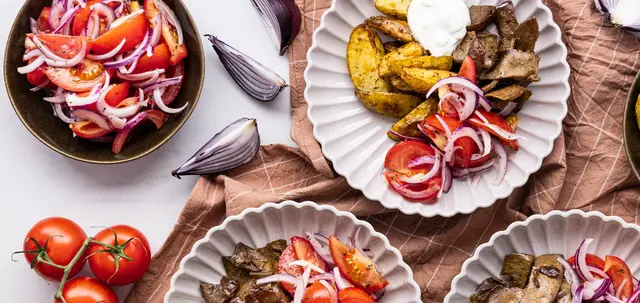
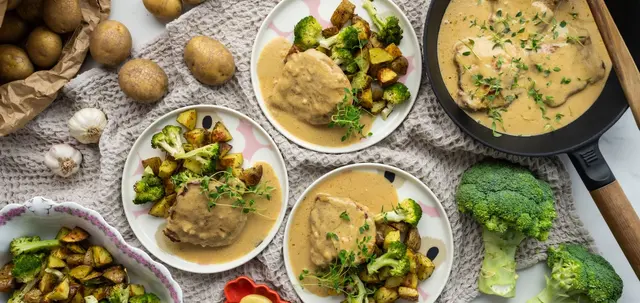
An air fryer suits the crisp parts of a recipe best. BBQ Chicken with Rosemary Potatoes and Apple Coleslaw, where chicken and potatoes are roasted, can be split so that the meat goes in the basket and the rest is finished as usual.
Food safety guidance notes that acrylamide forms in starchy foods when they are fried or roasted above 120 degrees, and the amount grows the darker the surface gets. Cook potatoes and bread to a golden colour rather than dark brown.
Clean the basket right after use
Fat left in the basket starts to smoke the next time you use it and carries over as a flavour. Let the basket cool for a moment, soak it in warm water and wash it before the next use.
Crisp weeknights without the planning
Yummy recipes arrive pre-portioned, so you can focus on cooking instead of what to buy at the shop.